Reducing barriers to healthcare: What Deaf people told us needs to change
The Beyond Barriers to Better Health Report found that almost half of the 77 BSL users who participated in the research were unhappy with their Primary Care experiences and felt their independence and privacy were compromised by having to rely on others.
Meanwhile, more than half of the 28 Primary Care staff who responded told us that they had little, or no, training on how to support deaf patients. [Primary Care encompasses general practice, optical services, dentistry and community pharmacies.]
Why did we do this work?
The work was funded by the Integrated Care Board’s Research and Engagement Network Development Programme in Hertfordshire, which aims to support work with partner organisations to develop and grow local research engagement networks and activity.
The working group included Hertfordshire's Hearing Advisory Service, Deaf Health Forum, Communities 1st and Gobby, who talked to experts by experience and Primary Care professionals. The aim was to amplify the voices of deaf people, promote inclusive healthcare practices and strengthen the understanding between healthcare providers and the deaf community - particularly at the first point of contact within healthcare settings.
The work focussed on:
- Exploring deaf people’s experiences accessing Primary Care services.
- Understanding the challenges deaf people face when accessing Primary Care services.
- Exploring Primary Care professionals’ experiences supporting deaf people.
- Understanding the challenges Primary Care professionals face in supporting deaf people.
Two deaf people trained and worked as Community Research Champions, enabling others from the same community to take part in the research, and engaged with six Deaf Clubs across Hertfordshire to elicit lived experience.
What did people tell us?
The communication barriers faced by deaf people when accessing healthcare services can lead to misunderstandings, wrong diagnoses and discrimination. As a result, this compounds the health and care inequalities that deaf people experience, which are already higher than the general population.
They are more likely to have:
- Higher mortality rates
- Poorer outcomes for conditions such as high blood pressure, high cholesterol, diabetes and cardiovascular disease.
- Later cancer diagnoses
- Poor dental health
- Poor mental health, with higher rates of anxiety/ depression.
Key findings of this research:
- More than a quarter of BSL speakers described their experiences with Primary Care as poor or very poor.
- There is a problematic reliance on family members and friends or pen and paper to communicate, which comes at a cost to people’s independence and privacy.
- More than half of the Primary Care staff we heard from had not received training, or had limited understanding, about how to support deaf patients.
- Less than one-third of deaf people reported that they were offered, or had access to, face-to-face British Sign Language (BSL) or a qualified BSL interpreter when accessing Primary Care services.
- Nearly half of the Primary Care staff we heard from noted their place of work offered face-to-face BSL or BSL interpreters. Very few signed in BSL themselves.
- Deaf people and Primary Care staff shared frequent experiences of BSL interpreters not being booked or not attending bookings. In some cases, deaf people were refused care due to a lack of interpreters.
- Only a few Primary Care staff supported deaf people by turning off waiting room music, offering separate, quieter waiting areas and repeating themselves or speaking more slowly when communicating.
- Key barriers to staff making the right adjustments for deaf people included lack of training, access to appropriate technology such as hearing loops and a lack of BSL interpreters.
What happens next?
Below is a list of recommendations that have been proposed to help and create better health outcomes for deaf people:
- Deaf people should be asked and enabled to communicate according to their preferences. Their communication needs should be clearly recorded in patient records and respected throughout their care.
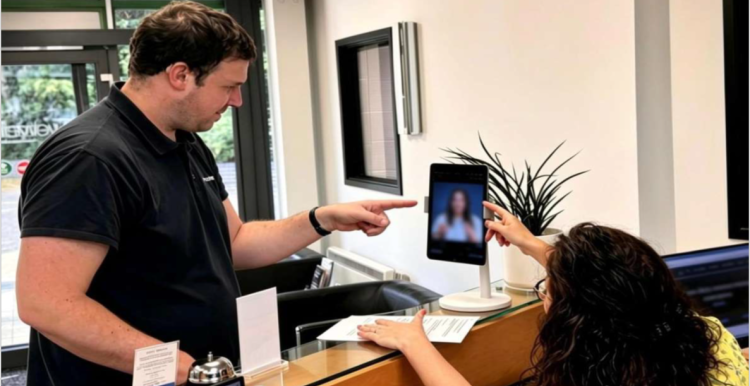
- Information should be available in accessible formats. People should be able to book appointments in different ways, including online, by text message, email, phone, face-to-face, or through Video Relay Services (VRS). This should include routinely having screens at reception desks and pharmacy counters to support accessibility.
- Interpreting should be more broadly available and should be booked in advance for appointments.
- Patients should be visually informed when it is time for their appointment. This could include visual display screens, vibrating pagers and staff alerting patients.
- Complaints and feedback systems should be more accessible, including options in British Sign Language (BSL), so deaf people can share their experiences and help improve services.
- Waiting areas should be made quieter where possible, for example by reducing background music or providing alternative quiet spaces.
- Equipment such as hearing loops should be checked regularly to make sure equipment and support systems are working.
- All staff should receive deaf awareness and communication training to help provide accessible and inclusive care.
“Healthwatch’s role in the Beyond Barriers to Better Health study has been invaluable. As active partners in the project, they helped to ensure the initial survey design was engaging and relevant for the deaf community. They were present and supportive throughout the community engagement stage, and the quality of the report they produced will help us advocate for change in our aim to make primary healthcare more accessible for deaf people.”
Robert Varney – Communities 1st, Health, Research & Business Partnerships Manager