Many older people don’t consider themselves frail: Our report finds language affects health interventions.
Many were also reluctant to talk or think about plans for care toward the end of their life. Instead, they wanted more help to live healthier lives now.
Our findings indicate that people are eager to live well in older age and are asking for more support and information from their GPs and the Council. We have made recommendations to the local NHS and relevant organisations about taking these forward and better ways to help and communicate with older people.
Why did we do this work?
The local NHS asked us to gather insights from Hertfordshire residents aged 65 and over about their views on frailty and ageing well. Frailty is a term typically used to describe a person’s level of independence and their mental and physical resilience. Some indicators of increasing frailty are weakened muscle strength, fatigue, vulnerability to falls, infections and an overall decline in health.
Our aims were:
- To find out what support people have used, or know about, in regard to ageing well.
- To understand views on hospital admissions, advance care planning and future care.
- To understand where people seek advice about preventing or managing frailty.
- To recommend to the local NHS how it can improve services for older residents.
Between June and August 2025 we heard from 41 residents aged between 65 – 100 years old. We visited three community events for older residents to speak with attendees, held five one-to-one interviews and a focus group online.
Engaging with people in their own spaces where they felt comfortable was a valuable part of this work, as it enabled us to talk to people who may have been difficult to reach.
What did people tell us?
-
The majority did not consider themselves frail.
“I’m not very good at walking, but I don’t think, well I don’t know, perhaps I am a bit frail really, I’ve got a heart condition so I suppose there’s that…but I take tablets and carry on to be quite honest…I don’t really need support for anything, I manage, you know!” [Aged 83]
-
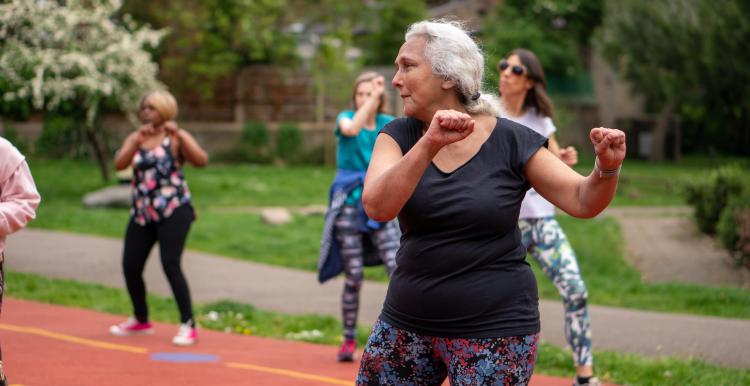
Most were proactive in preventing frailty. They tried to stay physically active, look after their wellbeing and socialise with friends and family. However, mobility/transportation often limited their activities.
“I try get out each day and try to go for a walk each day. I walk into the village and back, things like that.” [Aged 68]
-
They want more support from GP services. A large number did not feel supported and found accessing their GP practice increasingly difficult. Many wanted their GP practice to offer regular check-ups due to their age and/or health condition(s) but contact was often only when they were due a vaccination.
“It is something that’s quite concerning for me because it’s almost like the GP practice has forgotten I exist.” “They never seem to contact me apart from the flu jab.” [age not disclosed]
-
Most do not have regular medication reviews. They are also not certain what some of their medications are for, despite taking several medicines each day.
“I’ve got loads, all sorts of stuff. All different colours and shapes and stuff. Got no idea what half of them are.” [age not disclosed]
-
Many had good experiences of hospital care and wouldn’t object to receiving hospital care at home. The majority were not aware of the Hospital at Home Scheme*, but told us they would welcome care in their own home.
“If people can come into my home and treat me I think that would be the best option.” [Aged 98]
-
They were reluctant to think about future care preferences and end of life wishes. Many were not aware of Advance Care Plans** but did have concerns about the cost, availability and quality of social care services if they needed them in the future.
“It’s something I’ve thought about but I’m not ready yet. It’s just one of those things... You don’t want to think about your own mortality…while I’ve got my health, it’s not something I want to think about.” [age not disclosed]
-
Many want more information and advice about ageing well and preventing frailty from their GP or council. They emphasised clarity, tone and simplicity were vital.
“I’m single, I live alone. I do have concerns that the older I get, how I will cope and you know, whether I would get any help and I don’t know what facilities or anything like that there are really locally.”
* Hospital at Home can be conducted by a range of healthcare professionals and consists of a daily video call or in-person visit.
**Advance Care Plans offer people the opportunity to plan their future care and support, including medical treatment, while they have the capacity to do so.
What happens next?
We have suggested that the local NHS consider how best to implement the following recommendations for Hertfordshire’s ageing residents:
Communication:
- Pay particular attention to those digitally excluded, housebound or with limited understanding of spoken or written English.
- Consider alternative language to ‘frailty’.
- Increase awareness of preparing for future needs and support older residents to take an active approach to ageing.
GP services:
- Ensure older patients can access GP services in-person and by telephone.
- Ensure they have thorough, annual medication reviews, as appropriate.
- Increase NHS training on end-of-life and advance care planning conversations.
- Strengthen social prescribing (connecting people to activities, groups and services in their community to benefit health and wellbeing) to:
- Promote physical activity and reduce social isolation.
- Provide regular wellbeing checks.
- Greater awareness about signs of frailty.
System-wide:
- Provide information about Hospital at Home to raise awareness amongst older residents.
- De-stigmatise ageing and provide information about the signs of ill health, encouraging older people to get support if they need it.
- Maintain and promote social groups and community transport as vital parts of the infrastructure to support older adults.
“We’re committed to listening to the voices of older people and their carers to ensure local services reflect their needs and support them to live well. We commissioned Healthwatch as an independent organisation to do some focused research to provide greater insight into how our services impact on the lives of this important group of patients. I’d like to thank everyone who took time to share their feedback and experiences and for highlighting the importance that compassionate care, better communication, and inclusive access to health services play in how we deliver services.
“We will be studying the findings closely and will feed this into work to develop our multi-agency neighbourhood delivery plans that will shape local services for patients and communities as outlined in the NHS 10 year plan.”
Avni Shah
Director of Primary Care Transformation - Hertfordshire and West Essex ICB
Links to support available in Hertfordshire
To support older residents in Hertfordshire, local health and care organisations have produced an Ageing Well Toolkit to help people stay well and live independently. It contains clear, consistent messages about ageing well and frailty, including information about where to access support, receiving hospital care at home, advance care planning, medication reviews and discussing care preferences.
Age Friendly Hertfordshire is a county-wide programme working with residents, local councils, health services and community groups to create places where older people feel empowered, respected and connected.
Age UK Hertfordshire provides support, advice and activities to help older people in Hertfordshire feel valued, live well, age well and retain independence throughout later life.
Downloads
Frailty and Ageing in Hertfordshire: Real stories from our community